What size mechanical fan do I need to keep my subfloor dry and compliant with UK building regs?
The UK Building Regulations for England, as outlined in Approved Document C (Site preparation and resistance to contaminants and moisture), primarily specify passive ventilation requirements for subfloor voids in suspended ground floors (e.g., timber or concrete) to prevent moisture buildup and related issues like rot or condensation in residential dwellings. The standard is to provide ventilation openings in at least two opposing external walls, with a total open area of the greater of:
- 1,500 mm² per metre run of external wall, or
- 500 mm² per m² of floor area.
These openings must allow free airflow across the void, with a minimum clear void height of 150 mm from the ground covering to the underside of the floor (or insulation).
Mechanical ventilation using fans is not explicitly detailed in the regulations as the default approach but can be used as an alternative where passive vents are impractical (e.g., due to site constraints, retrofits, or flood risks). In such cases, the system must demonstrate equivalent performance to meet the intent of the regulations—preventing moisture accumulation— and should be approved by local building control. Mechanical setups often involve extract fans, supply fans, or alternating flow systems installed in the void or externally, connected via ducting to grilles.
To work out the required air change rate (ACH) for mechanical fans:
- Calculate the subfloor void volume: Multiply the floor area (in m²) by the void height (in m). The minimum height per regulations is 0.15 m, but measure the actual height if greater (e.g., in shrinkable soils or for heave allowance).
- Determine the target ACH: Regulations do not prescribe a specific ACH, as passive systems are variable (depending on wind and temperature differences). However, practical guidelines from subfloor ventilation products and studies suggest aiming for at least 1 ACH as a baseline to maintain dry conditions, though higher rates (e.g., 3–6 ACH) may be needed in damp-prone areas based on site-specific assessments. Measured rates in test houses with passive systems have ranged from 3 to 13 ACH, so mechanical systems can be conservative but constant.
- Calculate the required airflow rate: Use the formula Flow rate (l/s) = (Void volume in m³ × Target ACH) / 3.6 This converts the volume replacement per hour to litres per second. For example:
- A 100 m² floor with a 0.15 m void height gives a volume of 15 m³.
- For 1 ACH: (15 × 1) / 3.6 ≈ 4.2 l/s.
- Scale up for higher ACH or larger voids (e.g., a 40 m² floor with 0.6 m height = 24 m³; for 1 ACH: 6.7 l/s).
- System design considerations:
- Ensure cross-flow (e.g., fans on opposing sides or alternating supply/extract modes) to avoid dead spots.
- Account for pressure drops in ducting and grilles when selecting fan capacity.
- Include vermin-proofing, access for maintenance, and possibly humidity sensors for demand-controlled operation.
- For contaminants like radon, additional guidance from BRE Report BR 211 may apply, potentially requiring higher rates or positive pressurization.
Subfloor Mechanical Ventilation Report
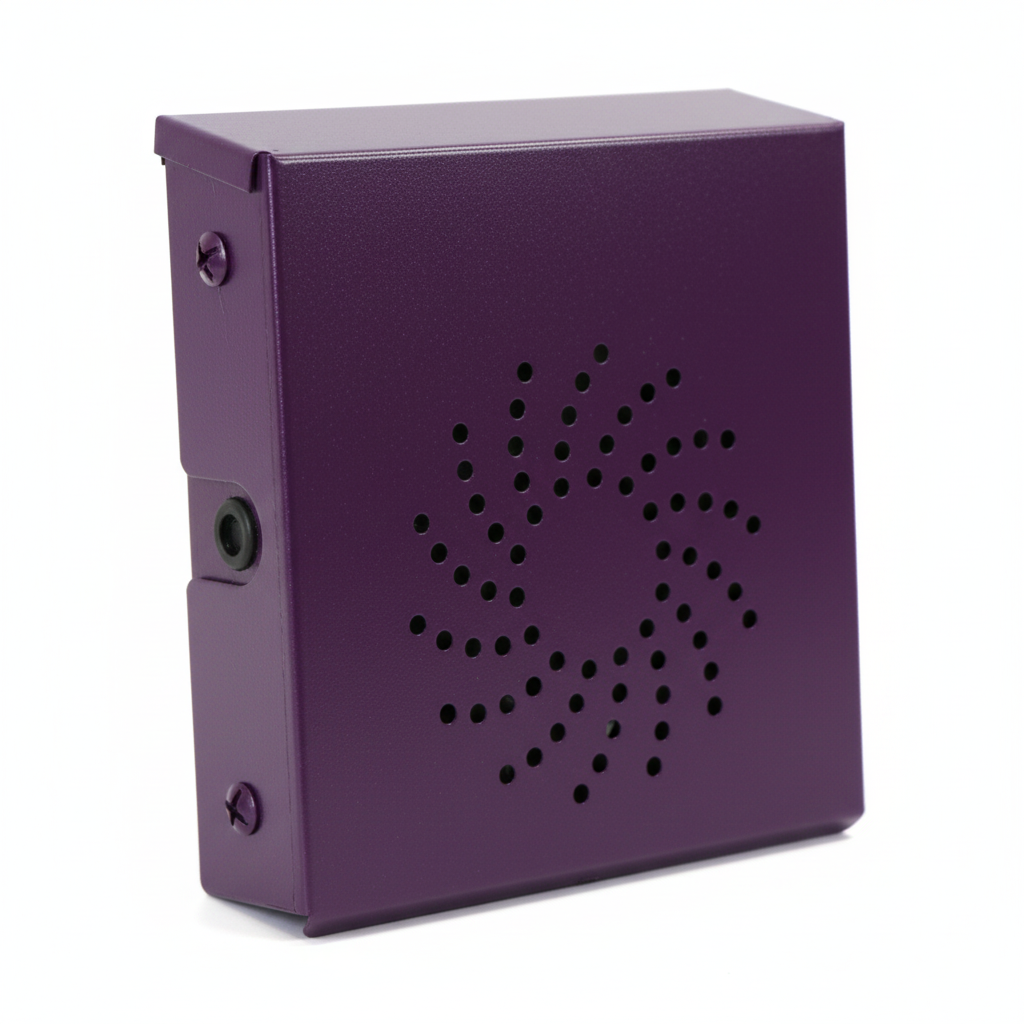
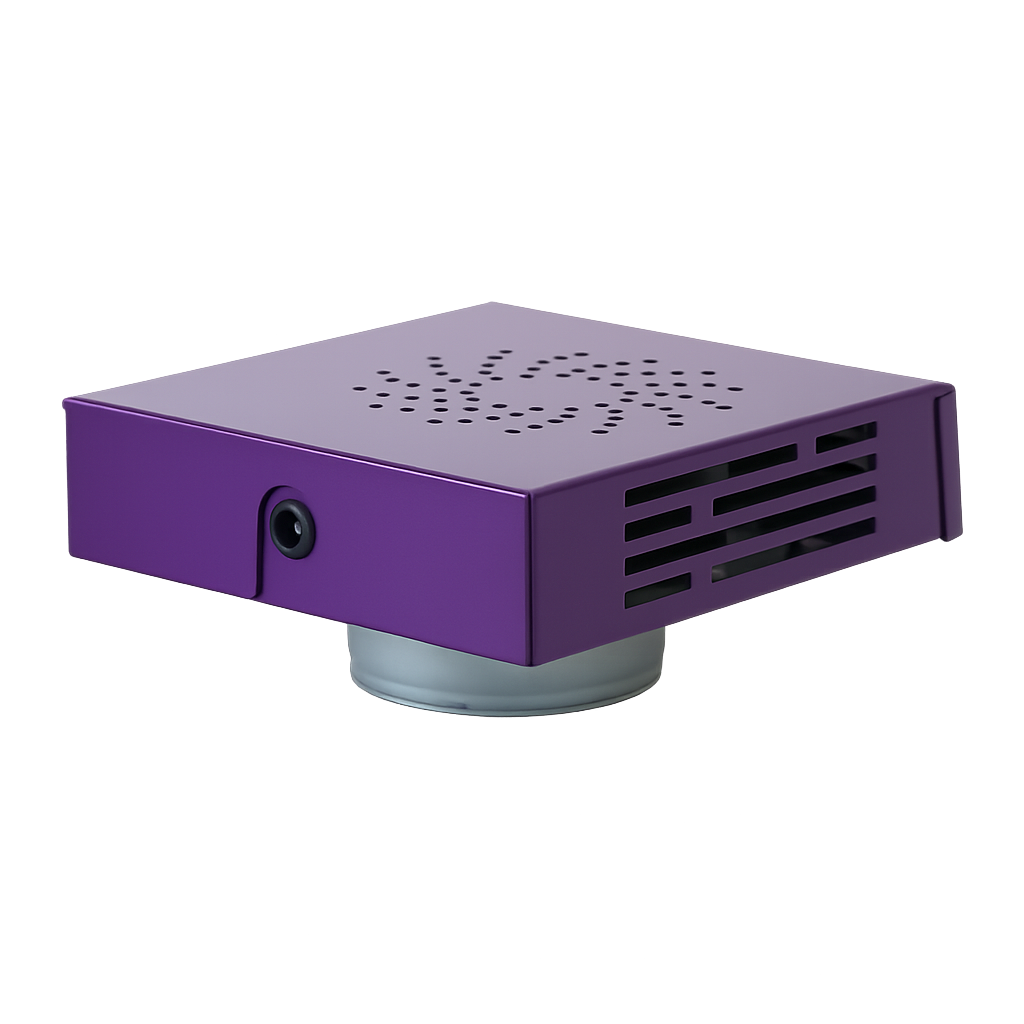
BASE 100 100mm Weatherproof Multi-Functional Subfloor Ventilation Fan
£285.00 + VAT
Welcome to the VENTI BASE 100, the pinnacle of indoor air performance designed specifically for subfloor ventilation. This fan is engineered to provide effective humidity control, Radon gas management, and enhanced air movement in hard-to-ventilate subfloor spaces.
The VENTI BASE 100 features a low-energy fan and motor assembly, ensuring typical electrical running costs are under £9 per year for continuous operation.
With adjustable low running and boost speeds, the VENTI BASE 100 adapts perfectly to a variety of installation needs, ensuring optimal ventilation.
The VENTI BASE 100 improves airflow beneath floors, preventing moisture buildup, reducing humidity, and promoting a healthier indoor environment.
Description
The VENTI BASE 100 is a weatherproof fan unit designed for easy external mounting, ideal for continuous subfloor ventilation. Many subfloor spaces lack adequate natural ventilation, making mechanical solutions essential. The VENTI BASE 100 was specifically engineered for these applications.
Its combination of wide airflows and various control modes gives ventilation system designers flexibility and choice.
Features and Benefits
- Weatherproof Design: Unique design allows for external mounting, simplifying installation and maintenance.
- Low Energy Costs: Operates continuously with typical electrical costs under £9 per year.
- Flexible Operation: Offers continuous operation at an adjustable trickle speed and an adjustable boost speed activated by an external switch.
Modes of Operation
The integral controls allow the fan to be set to operate at a trickle speed during installation. When connected to a boost switch, the fan runs at a predetermined speed when the switch is activated, automatically reverting to trickle speed once the switch is open.
Please note that appearance may vary.
You must be logged in to post a review.
Related products
-

CELERIO™ Decentralised Purge Extract Ventilation Fan Unit
Price range: £109.28 through £769.54 + VAT Select options This product has multiple variants. The options may be chosen on the product page
Reviews
There are no reviews yet.